The Near North is the transitional region between Southern Ontario's populated corridor and the vast, sparsely settled north. Roughly encompassing the area from North Bay to Sudbury and south to the Almaguin Highlands, it is a region where the Canadian Shield dominates the landscape and where the province's mining and forestry heritage is most visible.
This is a region of contrasts. Sudbury, once famous for its devastated, moon-like landscape, has undergone one of the world's most successful environmental reclamation projects. But drive twenty minutes in any direction and you will find abandoned mine sites, ghost towns, and the remnants of an industrial economy that once drove the region.
Mining Country
The Sudbury Basin is one of the world's great mining districts, producing nickel, copper, and other metals since the 1880s. The mining industry created dozens of communities around the basin, some of which have thrived and others that have not.
The smaller mining communities tell the most interesting stories. Places like Creighton Mine, Copper Cliff, and Coniston were company towns, built and owned by the mining companies that employed their residents. As mining operations consolidated and modernized, some of these communities were reduced or abandoned entirely. Their remains, company houses, mine buildings, and community facilities, are scattered across the landscape around Sudbury.
East of Sudbury, the Cobalt silver rush of 1903 created an entire constellation of small mining communities. Cobalt itself survives, but many of the surrounding settlements do not. The area is rich in industrial ruins: headframes, processing plants, and the remains of the infrastructure that supported one of the most dramatic mining booms in Canadian history.
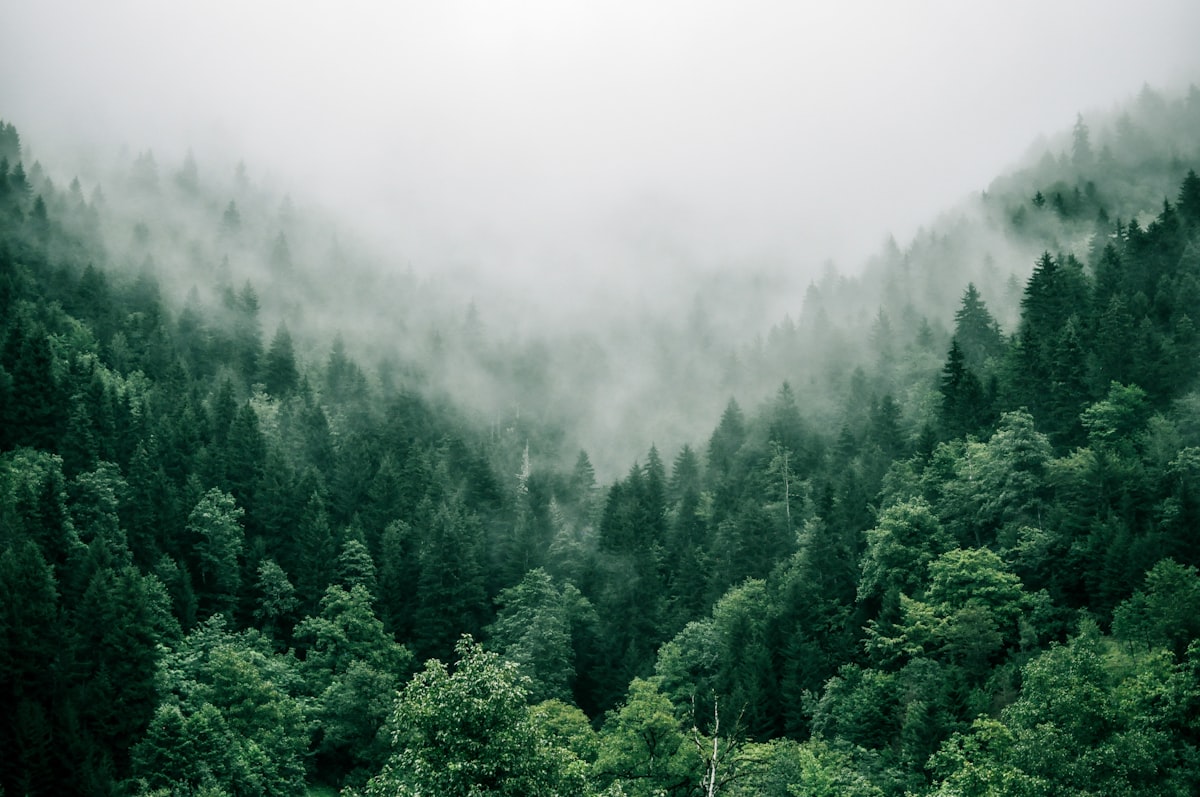 The Near North's boreal landscape hides the remnants of a century of mining and forestry.
Rail Heritage
The Near North was crisscrossed by railways that served the mining and forestry industries. Many of these lines have been abandoned, and their rights-of-way are now some of the best corridors for exploring the region's history. The rail history of Ontario is particularly visible here, where rock cuts, bridge abutments, and former station sites mark the routes that once connected every mine and mill to the outside world.
The most famous of these abandoned lines is the former Canadian Northern Railway route through the Algonquin Highlands, but numerous branch lines in the Sudbury, Temiskaming, and Parry Sound districts have also been abandoned. Walking these old rail corridors gives you access to terrain that is otherwise difficult to reach and provides a perspective on how thoroughly the region was industrialized in the early twentieth century.
Boreal Wilderness
Despite its industrial history, the Near North retains vast areas of wild land. The boreal forest stretches north from the region in an unbroken expanse that reaches the shores of Hudson Bay. Even within the more developed southern portions of the region, large blocks of Crown land provide opportunities for wilderness exploration.
The combination of wild landscape and industrial history creates an exploration experience that is unique to this region. You might paddle a pristine lake one day and visit an abandoned mine site the next. The contrast is part of what makes the Near North so interesting.
For those interested in hidden nature spots, the Near North has an abundance. Remote lakes accessible only by portage, waterfalls on rivers that do not appear in any guidebook, and rock formations exposed by glaciation are all common. The relatively low population density means that solitude is easy to find.